

Questions, answered
The showroom

Where is Handloom Garden in Puri?
Handloom Garden is on the ground floor of its A/C Mega Showroom at Swargadwar Square, Bharat Sevashram Marg, Puri, Odisha 752001, a short walk from the Swargadwar sea beach.
What are Handloom Garden's opening hours?
The showroom is open every day of the week, from 9 AM to 9 PM.
Which is the best place to buy handloom sarees in Puri?
Handloom Garden at Swargadwar Square is a Silk Mark certified handloom showroom with Sambalpuri, Bomkai, Patachitra, Ikat and tussar sarees under one roof, in an air-conditioned ground-floor store that is easy for families and senior visitors.
Is Handloom Garden Silk Mark certified?
Yes. Handloom Garden is a Silk Mark certified store. The Silk Mark label is issued by the Silk Mark Organisation of India, set up by the Central Silk Board, to certify that a product is made of natural silk.
How far is Handloom Garden from the Jagannath Temple?
The showroom is around 1.5 km from Shree Jagannath Temple, a few minutes by auto-rickshaw towards Swargadwar and the beach.
Which sarees is Odisha famous for?
Odisha is famous for Sambalpuri ikat (Bandha), Pasapalli, Bomkai, Khandua, Kotpad, Habaspuri and Berhampuri silk, as well as Patachitra art from Raghurajpur near Puri. Handloom Garden stocks most of these styles.
Can I check prices and order on WhatsApp?
Yes. Send the product code or a screenshot to +91 99379 37653 on WhatsApp and the Handloom Garden team will share the price, fabric details and availability, and can talk you through delivery options for your city.
What else does Handloom Garden sell besides sarees?
Along with sarees, the showroom stocks ikat kurtis and kurta sets, anarkali frocks, dress materials and salwar suit sets, jodo, scarves, stoles and handwoven bed covers.
What is a good handloom gift to take home from Puri?
Ikat stoles, jodo and scarves are light and easy to pack. For a special gift, a Sambalpuri or Patachitra saree carries the character of Odisha, and bed covers make a lasting present for the home.
How can I tell a genuine handloom saree from a power-loom copy?
Check the reverse: handloom ikat shows the pattern on both sides with softly feathered edges, and small irregularities are normal. For silk, ask for the Silk Mark label, which certifies natural silk.
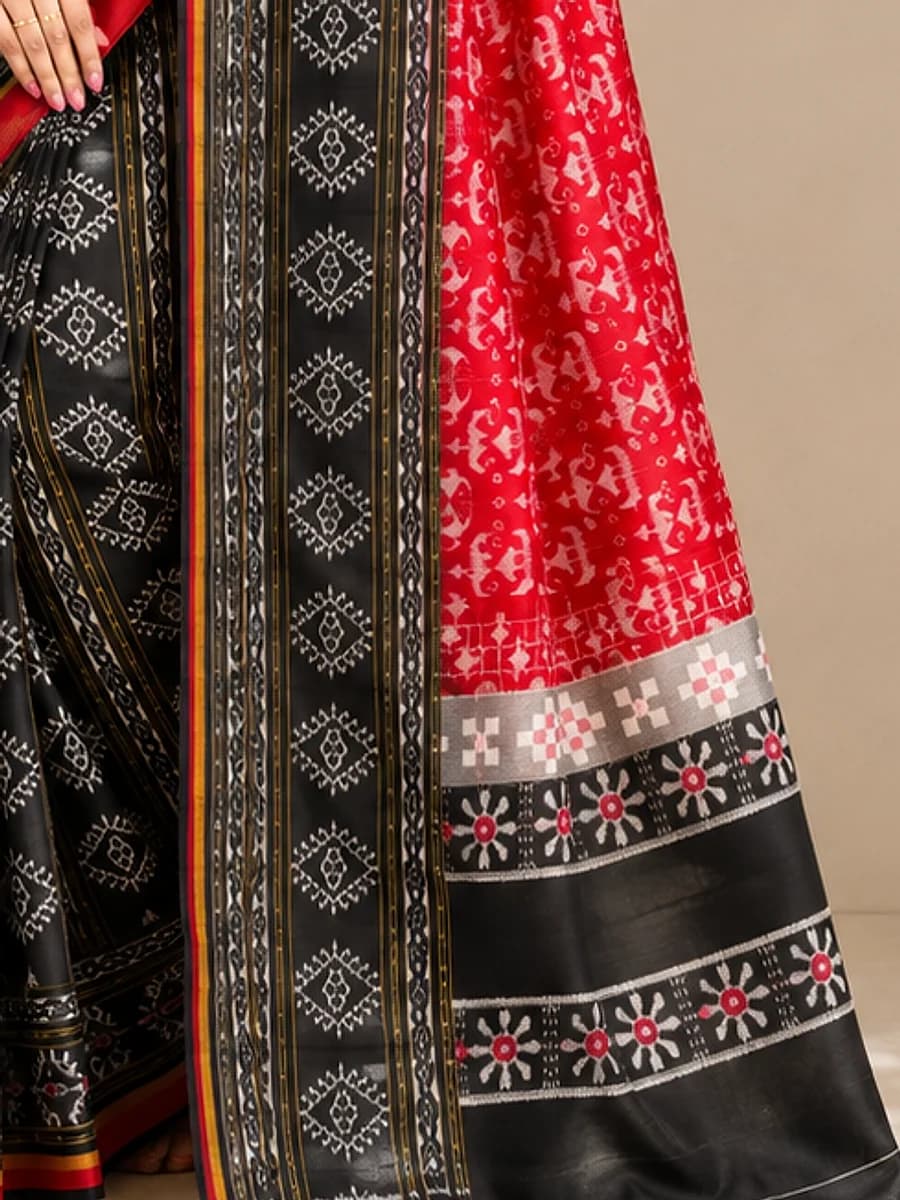
How can I tell if a Sambalpuri saree is original?
Turn it over. In a genuine Sambalpuri Bandha saree the motif shows on both sides with soft, feathered edges, because the yarn was dyed before weaving. Printed imitations are sharp on the front and faint on the back.
What is the difference between Bomkai and Sambalpuri sarees?
Sambalpuri patterns come from tie-dyed (ikat) yarn, while Bomkai is best known for extra-weft motifs woven into the border and pallu. Many sarees combine both: an ikat body with a Bomkai border.
Where does Patachitra art come from?
Patachitra comes from Odisha, with Raghurajpur village near Puri as its best-known centre. The art traditionally depicts Lord Jagannath and stories from Hindu epics.
Why is Kotpad handloom famous?
Kotpad is famous for its natural Aal-root dyes and its tribal weaving heritage, and it was the first handloom from Odisha to receive a GI tag.
What is Bandha in Odisha?
Bandha is the Odia name for ikat: the yarn is tied (bandha) and dyed before weaving, so the pattern is built into the thread itself.