

Bomkai Saree
- In Odia
- ବୋମକାଇ ଶାଢ଼ୀ
- Geographical Indication
- Bomkai sarees and fabrics are a registered Geographical Indication (GI) of Odisha.

Where it comes from
How it is made
Signature motifs
How to spot a genuine Bomkai
Border and pallu motifs are raised slightly and show floats of thread on the reverse, a sign of extra-weft weaving.
Temple (kumbha) borders run in a continuous row of spires along the length.
Colour contrast between body and border is bold and deliberate.
When to wear it
Bomkai is a favourite for weddings, festivals and temple visits. Its structured borders drape beautifully and photograph well.
Caring for it
Dry clean silk Bomkai. Store folded in soft cotton or muslin and refold along different lines every few months.
Bomkai Sarees at Handloom Garden


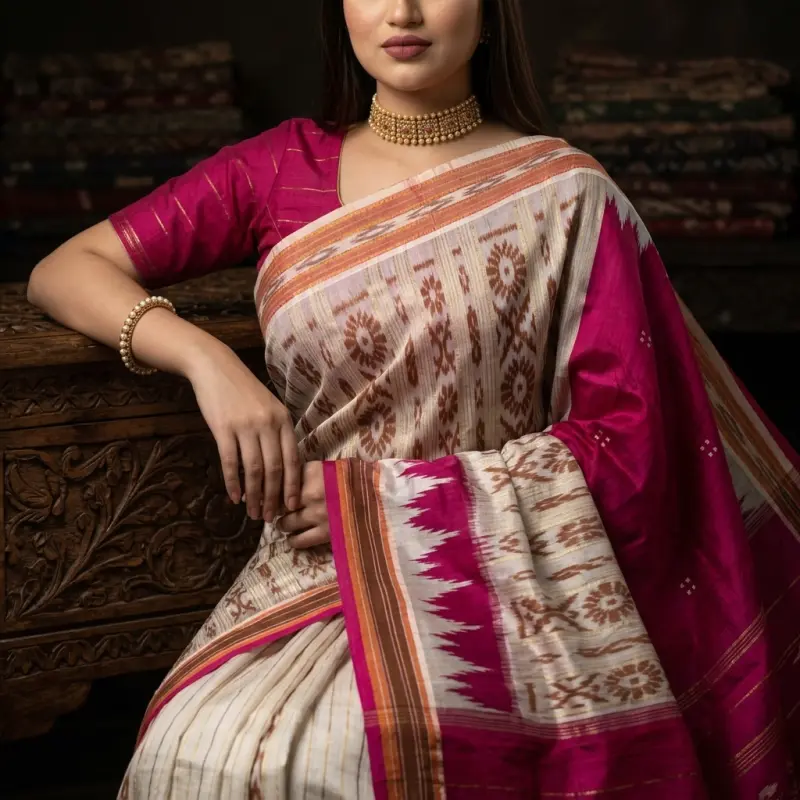
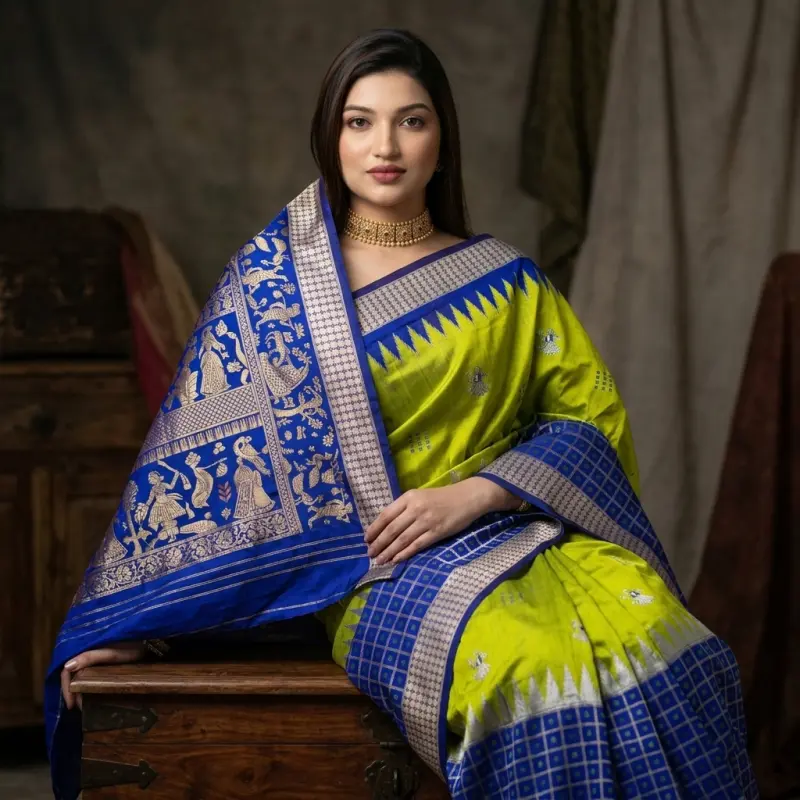
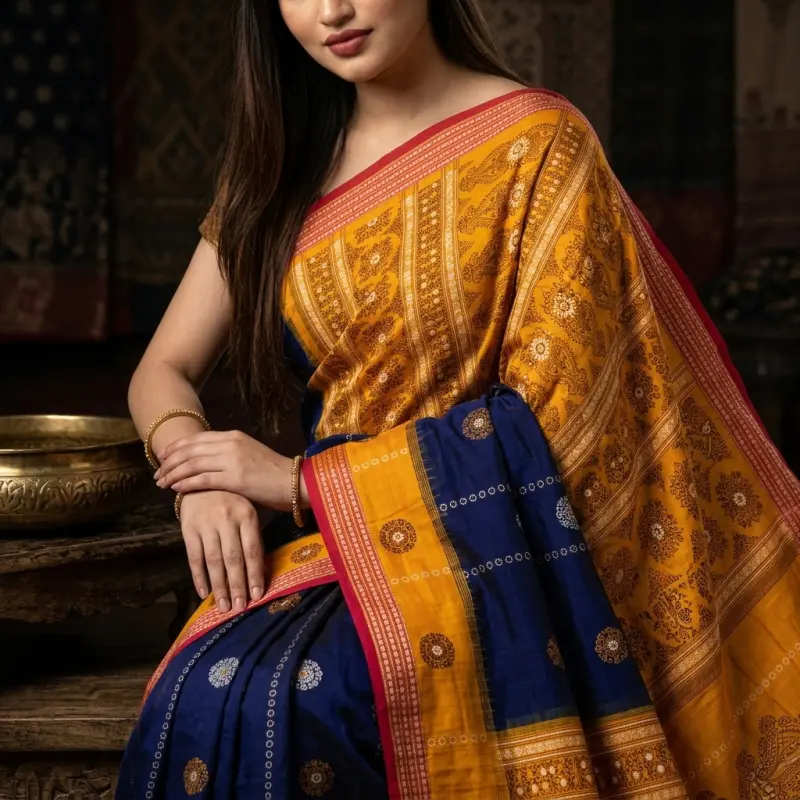
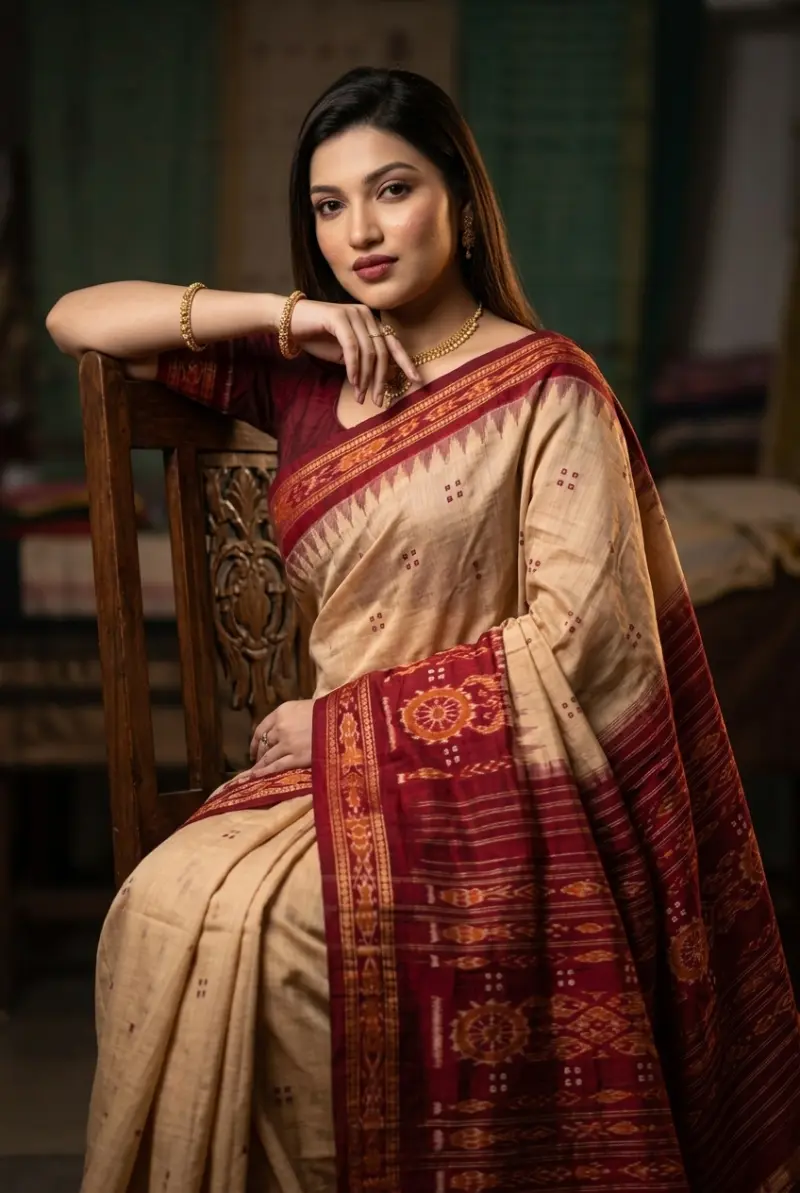
Bomkai
Crimson & Saffron Temple Border Saree
Bomkai Saree: questions
What is the difference between Bomkai and Sambalpuri sarees?
Sambalpuri patterns come from tie-dyed (ikat) yarn, while Bomkai is best known for extra-weft motifs woven into the border and pallu. Many sarees combine both: an ikat body with a Bomkai border.
Why do Bomkai sarees have temple borders?
The kumbha or temple-spire border is a classic Odisha motif linked to the state's temple architecture, which is why it feels especially at home in a temple town like Puri.